

When Obsession Takes Narrative Control
Some of my favorite books and movies that use obsession as its central theme

A few weeks ago, we discussed Moby-Dick by Herman Melville, focusing on otherness and obsession as themes in the novel. Moby-Dick was a huge surprise to me; it was a book I thought would be a difficult one to get through (and it was), but it was also magical and fun. If you haven’t had the chance to listen to the episode yet, check it out below!
Ever since reading Moby-Dick, I haven’t been able to stop thinking about Captain Ahab. Not necessarily because he is sympathetic or admirable, but because of the sheer force of his obsession. Ahab does not simply hunt the whale; he transforms the whale into a philosophy, a religion, and a personal mythology large enough to contain all of his rage, grief, and suffering.
It’s his obsession that is the core of this novel. It was the same day that Shruti and I recorded our episode of Moby-Dick that I watched the new movie Obsession, and something about this theme just clicked in me. Like Ahab, the film’s protagonist becomes consumed not by reality itself, but by a story he desperately needs reality to obey. It made me realize how many books and films use obsession not simply as a character trait, but as a form of narrative control. Obsessive characters impose meaning onto chaos. They rewrite grief into destiny, longing into purpose, perfection into salvation.
Perhaps that is why obsessive characters are so compelling to watch or read. They move through stories with terrifying clarity. In a world full of ambiguity, compromise, and uncertainty, obsession offers direction. It strips away distraction and complexity until only one thing remains. In some ways, this is entertaining and intriguing, but in other ways, it can be scary.
This newsletter goes through some examples of movies and books where I felt obsession taking narrative control really made the experience something I still think about.
Moby-Dick by Herman Melville
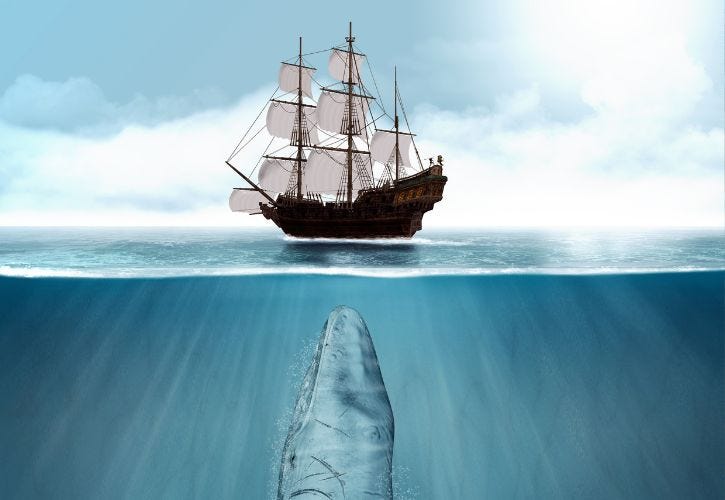
In Moby-Dick, Herman Melville gives us one of literature’s most iconic obsessive figures: Captain Ahab. But Ahab’s fixation on the whale is not really about revenge. The whale becomes a symbolic container for everything Ahab cannot tolerate.
What makes Ahab so compelling is that his obsession creates order. Without the whale, suffering is meaningless. With the whale, suffering becomes destiny. The Pequod’s voyage transforms from a commercial expedition into a mythic crusade because Ahab needs reality to conform to a story where pain has purpose and the universe can be confronted directly.
What I enjoyed most was that Ahab’s obsession feels so human. His character isn’t necessarily likeable or sympathetic, but his fixation made me want him to succeed in his venture. It gave me a perspective I don’t think I would have come to outside of this specific story, and allowed me to side with his monstrous revenge.
Obsession (In Theatres)

Curry Barker’s Obsession explores fixation through memory, grief, and romantic idealization. The protagonist is unable to process grief honestly, so he attempts to build an unlikely future. What starts as a simple and (maybe?) innocent wish turns into chaos and destruction.
The film suggests that obsession is not devotion to another person but devotion to an emotional reality one refuses to relinquish. The central relationship becomes less about another human being and more about control, guilt, and resurrection.
I think some of the themes of this movie ask what love really means, and not what you would do to get it, but more importantly, would you set it free for someone else’s happiness? This movie was an incredible experience, and I know I am not the first to say that.
The Picture of Dorian Gray by Oscar Wilde

Oscar Wilde’s The Picture of Dorian Gray examines obsession through vanity, youth, and the refusal of consequence. Dorian becomes obsessed not simply with beauty but with preserving the illusion of an untouched self. The portrait absorbs corruption while Dorian maintains the appearance of innocence.
Dorian attempts to separate action from visible consequence; he wants a story in which pleasure can exist without decay and desire without accountability.
Wilde exposes how obsession often emerges from terror, and that terror can be turned into defeat, grief, or revenge. In Dorian’s case, his obsession makes him greedy, and ultimately, he must suffer the consequences of his decisions.
Black Swan (streaming on Disney+)

In Black Swan, obsession functions as self-destruction in pursuit of perfection. Nina believes that if she can become the perfect performer, she can become complete. Her journey through artistic transcendence gradually consumes the boundaries of her identity until performance and selfhood collapse into one another.
Nina’s obsession is directed inward. She is not trying to conquer the external world but to eliminate imperfection within herself. Yet the structure remains the same: obsession creates a narrative where suffering acquires meaning. Every sacrifice, humiliation, and psychological fracture becomes justified.
The horror of Black Swan lies in how seductive this logic feels. The film understands that audiences are culturally conditioned to admire obsessive dedication, especially in art. We all love to romanticize discipline until it leads to catastrophe.
The Worry Doll by Laura McPhee-Browne
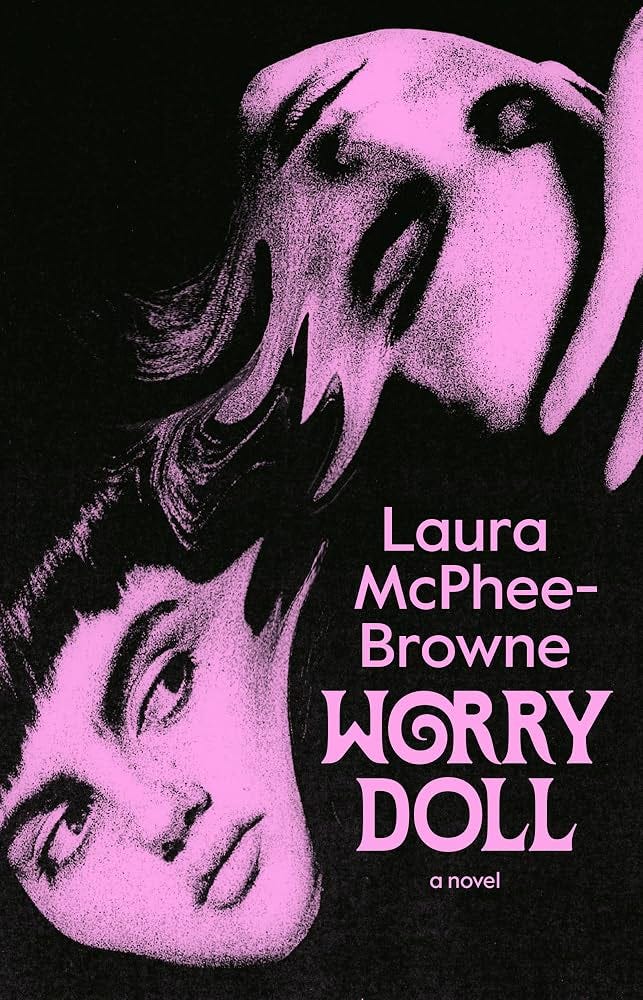
Laura McPhee-Browne's Worry Doll shifts the conversation away from epic obsession and into the intimate terrain of memory and desire. At its heart is an obsessive relationship told through two perspectives, each offering a different version of what happened. Rather than asking which narrator is telling the truth, the novel asks a more unsettling question: how much of love is simply a story we construct?
Both women continually revise, reinterpret, and reshape their shared history, revealing how memory is less like an archive than an act of authorship. Desire becomes entangled with storytelling until it is impossible to separate what actually happened from what each character needs to believe happened.
This is obsession as narrative control in its most psychologically subtle form. The novel suggests that when relationships end, we become editors of our own emotional histories. We emphasize certain moments, erase others, invent motives, and smooth over contradictions until the story feels coherent enough to live with.
Whiplash (streaming on Tubi)
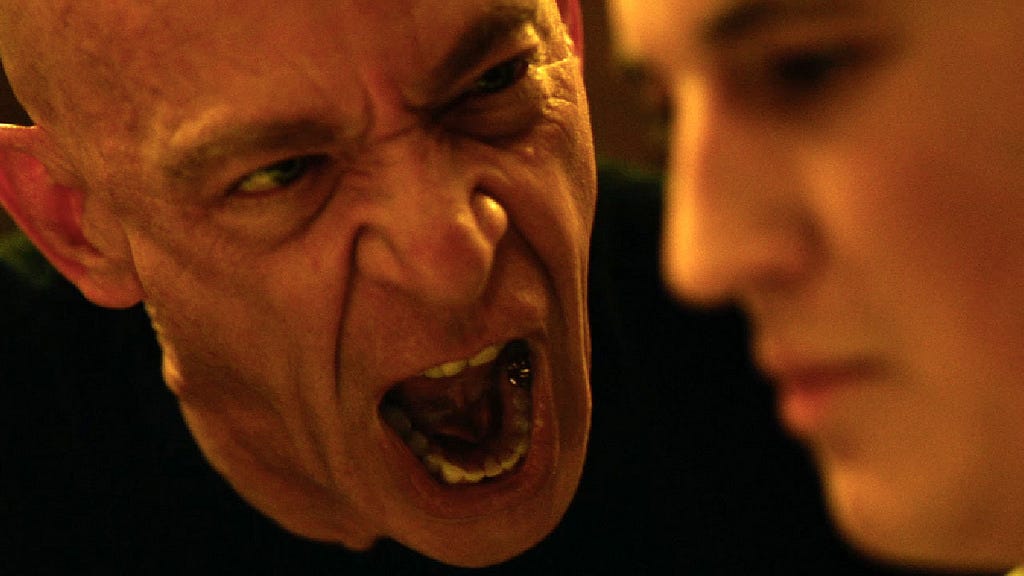
Whiplash reframes obsession through ambition and artistic achievement. Andrew’s fixation on greatness gives his life structure, intensity, and identity. Suffering becomes meaningful because it contributes to the larger narrative of becoming extraordinary.
The film is disturbing because it battles with moral clarity. Obsession produces genuine brilliance even as it destroys intimacy, stability, and selfhood. Fletcher’s abusive philosophy only works because Andrew already wants to believe that greatness requires sacrifice.
Like many obsession narratives, Whiplash asks whether meaning can exist without extremity. The ordinary life becomes framed as failure, while obsession offers transcendence through total commitment. The danger is that once identity fuses completely with achievement, there is no longer a self outside the pursuit.
Do you have any favorite movies or books that center around obsession? Leave a comment below!
—Neha
In Case You Missed It…
While the novel tea podcast is currently on hiatus as we prepare for Season 8, check out some of our favorite Season 7 related newsletters below!


LOVED all the references you made, especially moby-dick and thepicture of dorian gray. i actually just wrote about obsession (the movie) as well, and one thing i noticed too is that its premise isn’t really original. it’s a recurring idea across literature and other forms of art, but what makes this film so unsettling is how horror pushes obsession to its absolute limit, to the point where it no longer seems governed by rationality. here’s my piece if you’d like to check it out :) https://substack.com/@fmvrglo/note/p-206989230?r=7a2afn&utm_medium=ios&utm_source=notes-share-action
SHE'S A LAMB has a terrifically mad, single minded unreliable narrator who knows beyond a doubt that her destiny is to be a musical theater star even though she is just an usher. Her path of self delusion is a wild ride.